
Community Composting
Make composting a team effort.
Community members are coming together to use central composting sites maintained by municipalities and local groups. Community composts work like a backyard compost pile, only on a larger scale.
Community composting sites generally use low-tech technology like open-air window composting – long, triangulated piles of organic waste are piled up and turned regularly by a front-end loader.
A drop-off site provides residents with a means to compost organic waste from their home. Community compost sites accept the same types of waste you would put in a backyard compost, like food scraps and yard waste.
Compost Bin Distribution Program
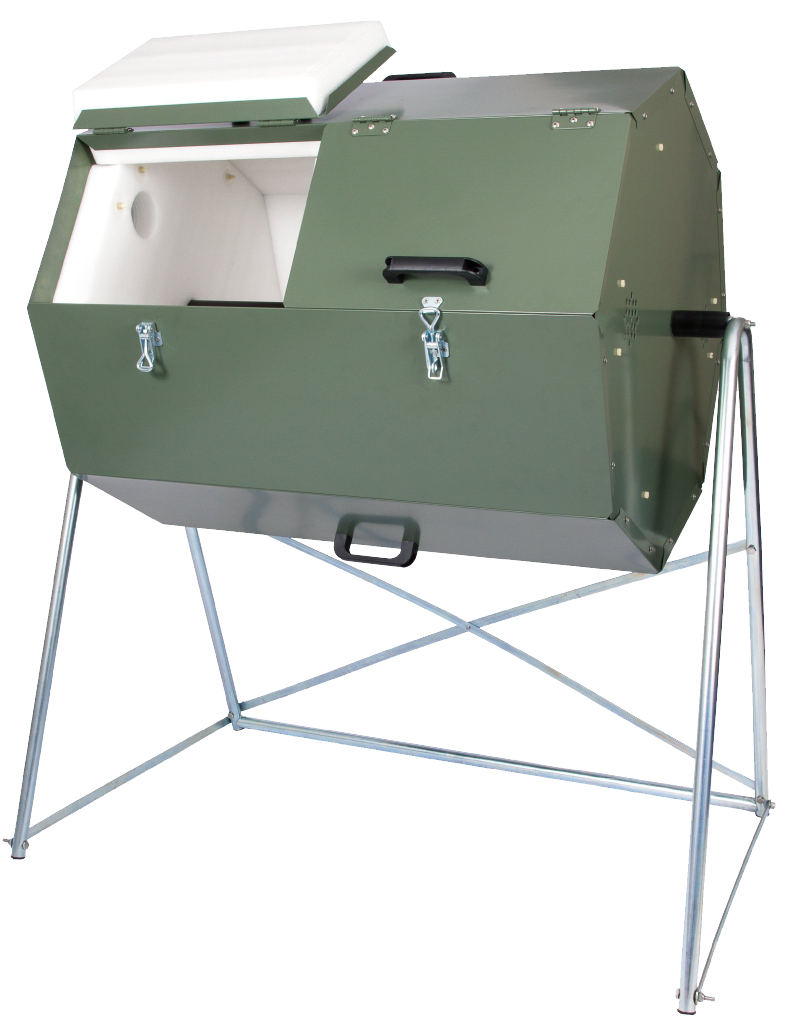
In recent years, MMSB’s Backyard Compost Bin Distribution Program (BYCDP) has evolved into the Compost Bin Distribution Program (CBDP), which now includes both backyard compost bins and larger-scale community compost bins. Since 2005, over 36,000 compost bins have been distributed throughout the province.
Benefits of Community Composting
- Reduces waste – increasing the lifespan of our landfills.
- Decreases the cost of transporting and disposing of waste.
- Reduces greenhouse gas emissions (methane gas).
- Reduces leachate (toxic liquid running from landfills).
- Shows a community’s commitment to local environmental sustainability.
- Produces compost used by the community to add nutrients to the soil.
To learn more about what community composting programs may be available in your area, reach out to your local municipality, or search online for local environmental groups and community gardens.
Our Community Composting Guide also provides valuable details on how your community can start is own community composting program.
Bringing Community Composting to Life
Watch the video to see how the Town of Georges Brook – Milton launched their community composting program!
Nearly 25% of their waste was organic material, so they started their own community compost initiative to divert their food waste from the landfill – right into their community garden!